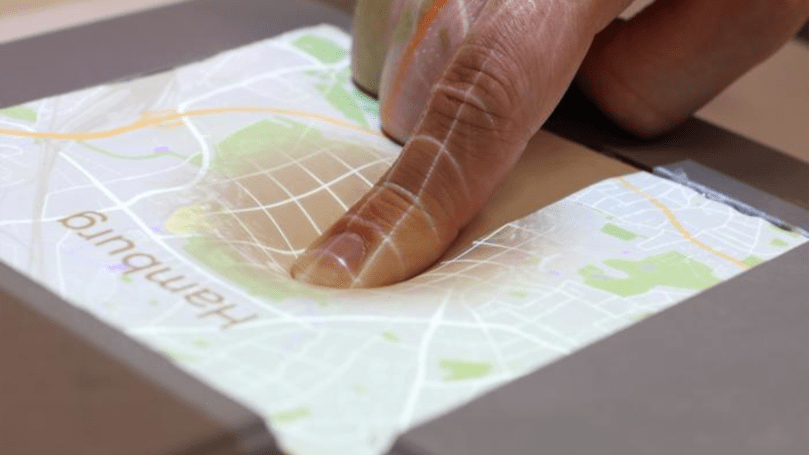
A Glimpse into the Future: The Emergence of Deformable Touch Screens
In an era where touchscreens dominate our interaction with technology, researchers at the University of Bath are pushing the boundaries of what’s possible with a revolutionary new screen technology. Introducing the “DeformIO,” a silicone-based touch screen that can physically alter its shape and stiffness in response to user interactions. This innovation promises to transform how we interact with our devices, offering a new dimension of tactile feedback.
Understanding DeformIO: A New Era of Touch Interaction
How Does DeformIO Work?
The DeformIO screen represents a significant leap from previous tactile technologies. Traditional pressure-responsive screens relied on reconfigurable panels or raised pins, which could create noticeable gaps between areas of pressure and non-pressure. In contrast, DeformIO employs pneumatics and resistive sensing to provide a continuous tactile experience.
- https://www.skool.com/real-exam-dumps-3783/des-1111-dumps-2024-best-study-approaches-for-the-dell-des-1111-exam
- https://www.skool.com/real-exam-dumps-3783/csm-001-dumps-2024-best-study-approaches-for-the-gaqm-csm-001-exam
- https://www.skool.com/real-exam-dumps-3783/data-architect-dumps-2024-best-study-approaches-for-the-salesforce-data-architect-exam
- https://www.skool.com/real-exam-dumps-3783/cset-f-dumps-2024-best-study-approaches-for-the-isqi-cset-f-exam
- https://www.skool.com/real-exam-dumps-3783/dmf-1220-dumps-2024-best-study-approaches-for-the-dama-dmf-1220-exam
- https://www.skool.com/real-exam-dumps-3783/csslp-dumps-2024-best-study-approaches-for-the-isc2-csslp-exam
- https://www.skool.com/real-exam-dumps-3783/dp-203-dumps-2024-best-study-approaches-for-the-microsoft-dp-203-exam
- https://www.skool.com/real-exam-dumps-3783/ex294-dumps-2024-best-study-approaches-for-the-redhat-ex294-exam
- https://www.skool.com/real-exam-dumps-3783/education-cloud-consultant-dumps-2024-best-study-approaches-for-the-salesforce-education-cloud-consultant-exam
- https://www.skool.com/real-exam-dumps-3783/field-service-consultant-dumps-2024-best-study-approaches-for-the-salesforce-field-service-consultant-exam
Pneumatic and Resistive Sensing Technology
DeformIO’s ability to dynamically change its stiffness is achieved through a combination of pneumatics and resistive sensing. Pneumatics allow the screen to physically deform in response to pressure, while resistive sensing converts these physical forces into electrical signals. This enables the screen to adjust its surface properties in real-time, providing a seamless and fluid interaction.
A New Level of Tactile Feedback
This new screen technology allows users to experience uninterrupted tactile feedback as they interact with various parts of the screen. The DeformIO is 3 mm thick and has a 140 mm² surface area, making it capable of handling multiple simultaneous inputs with ease. This advancement promises to enhance user interaction by making touch responses more intuitive and natural.
Potential Applications of Deformable Screens
Revolutionizing Everyday Mobile Use
If DeformIO technology becomes mainstream, it could dramatically change how we use mobile devices. Imagine a traveler using a deformable screen to switch between different map views by applying varying levels of pressure. Similarly, gamers might use pressure-sensitive controls to enhance their gameplay experience, and app developers could create new, tactile ways to interact with their applications.
Enhanced Digital Experiences
Beyond mobile devices, deformable screens could be utilized in a variety of contexts. For instance, a screen could simulate the sensation of a mattress’s firmness or provide more intuitive controls in car touchscreens. This technology could allow users to feel topographical data or adjust settings with physical feedback, enhancing overall user engagement.
Testing and Development: Current Progress
Researchers have conducted extensive testing of DeformIO using both robotic arms and human testers. Robots measured surface stiffness and touch accuracy, while human reviewers assessed the screen’s usability. Results showed that users could effectively interact with multiple pressure points and accurately detect variations in stiffness, suggesting a promising future for this technology.
Challenges and Future Prospects
User Adaptation and Market Acceptance
Despite its innovative features, DeformIO is still in the prototype stage and may not be available to consumers for another decade. The transition from traditional glass screens to deformable ones may face resistance from users accustomed to established technology. Additionally, the tactile nature of deformable screens might conflict with current trends toward thinner devices.
Looking Ahead
As researchers continue to refine DeformIO, they remain optimistic about its potential. “We hope that in 10 to 20 years, the concepts embodied in DeformIO could become a standard feature in mobile phones,” said Professor Jason Alexander from the University of Bath. For now, the focus is on exploring the technology’s best applications and potential impact on the future of touch interfaces.




 Trending Wires