OpenAI Disbands Team Focused on Preventing Rogue AI

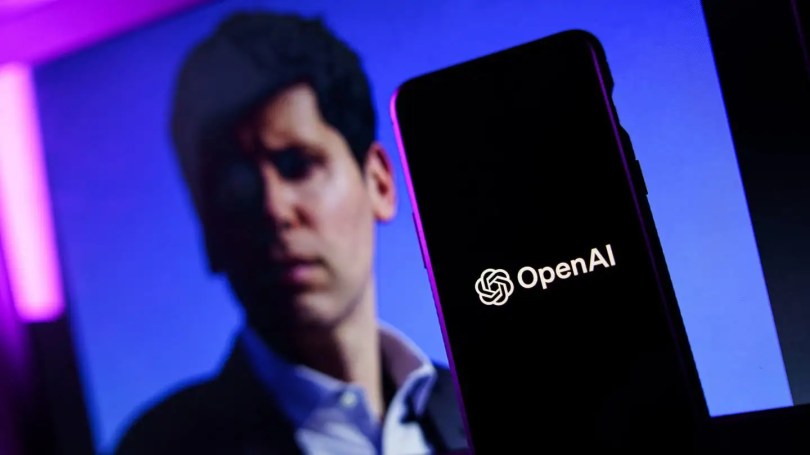
OpenAI has recently disbanded its Superalignment Team, which was created to address potential existential risks associated with artificial intelligence. The decision, confirmed today by Wired and other sources, comes less than a year after the team’s establishment. Jan Leike, a former co-lead of the team, revealed the dissolution in a detailed thread on X, following his cryptic resignation announcement on May 15.

A Brief History of the Superalignment Team

The Superalignment Team was launched in July 2023, with the goal of managing the risks posed by superintelligent AI. OpenAI initially described this initiative as essential, noting that while superintelligent AI could potentially solve major global challenges, it also posed serious risks including the potential for human extinction. The team, led by Leike and OpenAI co-founder and chief scientist Ilya Sutskever, was tasked with developing strategies for AI governance and alignment.

Leadership Departures and Internal Disputes

Leike’s resignation and the subsequent disbandment of the team highlight ongoing internal disagreements at OpenAI. Leike cited fundamental disagreements with OpenAI’s leadership regarding the company’s core priorities as a key factor in the team’s dissolution. Sutskever, who also co-led the Superalignment Team, has since left the company, reportedly over similar concerns. The remaining team members have been reassigned to other research groups.

Contradictions in OpenAI’s Approach

Despite the emphasis on AI risks, OpenAI, along with competitors like Google and Meta, continues to showcase advancements in AI technology. Recent releases include GPT-4o, a multimodal generative AI system capable of generating lifelike responses. This emphasis on cutting-edge developments contrasts with the company’s warnings about the dangers of “rogue AI.” Critics argue that while AI companies push forward with new technologies, they may be neglecting serious safety concerns.

The Broader Implications and Industry Reactions

The exact reasons behind the shutdown of the Superalignment Team remain unclear, but recent internal power struggles suggest significant differences in opinion on how to advance AI technology safely. Critics of the AI industry point out that the technology, while not yet self-aware, is already impacting issues such as misinformation, content ownership, and labor rights. As AI systems become more integrated into various sectors, society faces growing challenges in managing their consequences.

In summary, the disbandment of OpenAI’s Superalignment Team underscores the complex balance between technological innovation and safety. As the AI industry evolves, it will be crucial for companies and regulators to address these challenges while ensuring that advancements do not outpace the measures needed to mitigate potential risks.
Breakthrough Technology Promises to Revolutionize MRI Machines by Reducing Their Size

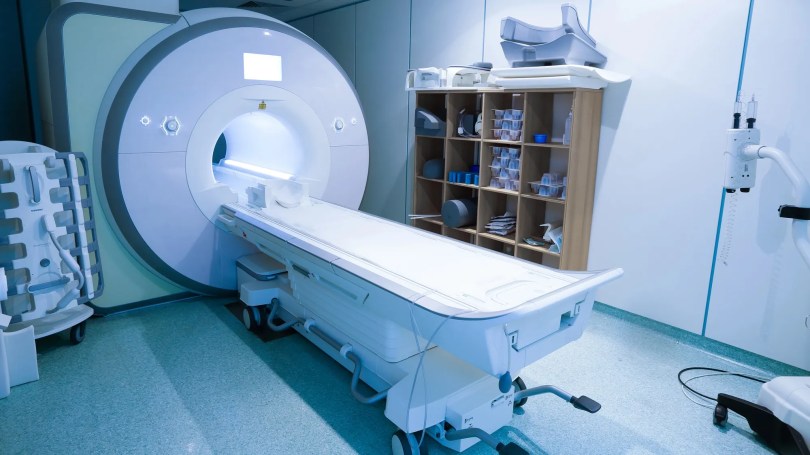
Magnetic resonance imaging (MRI) machines are essential in modern medicine, yet their large size and high cost have historically limited their availability. Traditional MRI systems rely on bulky superconducting magnets made from copper and niobium-tin alloy, which contribute to their expense and physical footprint. As a result, these advanced machines are typically confined to well-funded hospitals with dedicated space.

Breakthrough in Superconducting Magnets

Recent advancements from researchers at King’s College London, in collaboration with several Japanese universities, promise to change this landscape. The team has developed a new, cost-effective iron-based superconducting magnet that significantly reduces the energy required to operate MRI machines. Detailed in a study published on June 7 in NPG Asia Materials, this innovative prototype is 2.7 times more powerful than existing iron-based magnets and meets the rigorous stability and strength requirements necessary for MRI applications.

The Role of Machine Learning

The success of the new iron superconductor magnet owes much to the application of machine learning (ML). Researchers employed an ML system called BOXVIA to enhance their magnet design. By training BOXVIA on various parameters from previous experiments—such as heat and fabrication time—the system identified weaknesses and potential improvements. BOXVIA’s refined approach led to the discovery of a novel structural design that uses varying sizes of iron crystals, which deviates from the traditional uniform crystal rates.

“[Our] process lays the groundwork for manufacturers to produce these magnets quickly and at a lower cost, potentially increasing the availability of MRI machines,” said Mark Ainslie, an engineering professor at King’s College and a co-author of the study.

Expanding Accessibility and Future Applications

The new design not only promises more affordable MRI machines but also paves the way for smaller, more accessible tools that could be used in general practitioners’ offices. Although superconducting magnets still require cooling to extremely low temperatures—around 5 Kelvin (-450.76°F)—the advancements made could lead to faster production and broader industrial applications.

Looking ahead, researchers will continue to investigate the unique nanostructures revealed by machine learning to further understand their superconductive properties. These findings could lead to even more powerful and efficient superconducting magnets in the future, potentially benefiting not only medical imaging but also fields like nuclear fusion, electric aviation, and maglev transportation.

Revolutionary Device Lets Users Control Mouse Cursor with Their Tongue

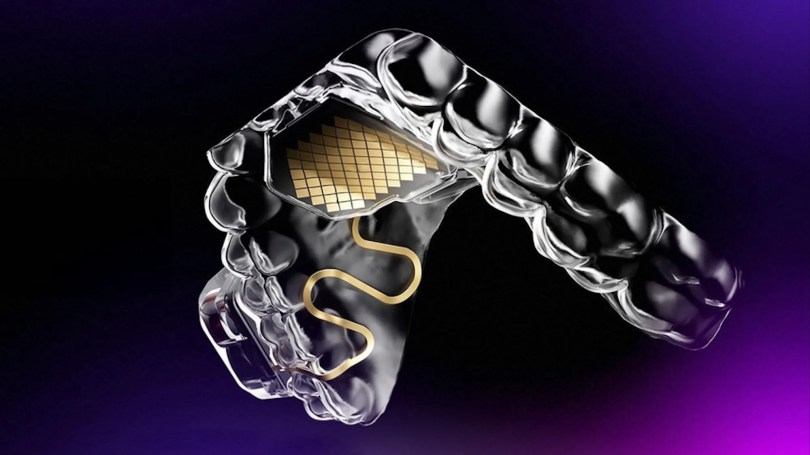
Recent innovations in brain-computer interfaces (BCIs) have made headlines, but a new device is offering a more accessible alternative for individuals with physical disabilities: the MouthPad. Developed by MIT graduate Tomás Vega and his company Augmental, the MouthPad is a cutting-edge device that enables users to control a computer cursor using simple tongue movements.

From Personal Experience to Innovative Solution

Tomás Vega, CEO and co-founder of Augmental, has long been driven by a desire to enhance human capabilities through technology, inspired by his own experience with a stutter at the age of five. After an internship with Neuralink, Vega explored the potential of brain implants but found their complexity and cost limiting. This led him to consider a more straightforward and practical approach.

Harnessing the Power of the Tongue

Vega identified the tongue as a promising interface due to its substantial representation in the brain and its muscle composition. “The tongue comprises eight muscles, with most muscle fibers being slow-twitch, meaning they fatigue less quickly,” Vega explained. This insight led to the development of the MouthPad, a 3D-printed retainer made from dental-grade materials and equipped with advanced sensors.

MouthPad: How It Works

The MouthPad functions as a mouth-based computer mouse, allowing users to navigate their computer with their tongue. It offers a range of controls:

  • Scrolling: Move the cursor in any direction with tongue movements.
  • Right-click: Perform a right-click by making a sipping motion.
  • Left-click: Execute a left-click by applying pressure to the palate.

The device’s high degree of customization allows it to accommodate various physical abilities, including adaptations for biting, clenching, and movements tracked by neck and head movements.

Future Developments and Goals

Vega and Augmental aim to seek FDA approval to expand MouthPad’s functionality to include control over robotic arms and wheelchairs. With FDA clearance, the MouthPad could become eligible for medical insurance reimbursement, making it accessible to a broader range of users. Future versions may also incorporate more nuanced physical interactions, such as whispers and subtle internal speech organ movements, offering a significant advancement for individuals with speech impairments or compromised lung function.

By combining innovative technology with practical usability, the MouthPad represents a major leap forward in assistive devices, promising greater independence and control for individuals with physical disabilities.

Master the Art of Voice Cloning on Your iPhone or Mac

Apple’s innovative Personal Voice feature, introduced in iOS 17 and macOS Sonoma, allows you to create a digital replica of your voice. Initially designed as an accessibility tool for individuals who might lose their voice, this feature is available to anyone with compatible Apple devices. Here’s how to set it up and make the most of it.

What is Personal Voice?

Personal Voice uses on-device machine learning to create a voice clone based on your unique vocal characteristics. This feature ensures that your recorded audio remains private, processed directly on your device without being sent to the cloud. Should you choose to share it between devices, the data is encrypted via iCloud, maintaining your privacy and security.

Device and Software Requirements

To use Personal Voice, ensure your device meets the following criteria:

  • Software: iOS 17, iPadOS 17, or macOS Sonoma or later.
  • Hardware: iPhone 12 or newer, 5th-gen iPad Air or newer, 3rd-gen 11-inch iPad Pro or newer, 5th-gen 12.9-inch iPad Pro or newer, or any Mac with Apple silicon (M1 or later).

Setting Up Personal Voice

On iPhone or iPad:

  1. Go to Settings.
  2. Tap Accessibility.
  3. Select Personal Voice.
  4. Tap Create a Personal Voice.
  5. Follow the on-screen instructions to record your voice. You’ll need to repeat a series of phrases.
  6. To pause, tap or click Done, or exit the recording window. You can return to complete the recording later.

On Mac:

  1. Open the Apple menu.
  2. Select System Settings.
  3. Navigate to Accessibility and find Personal Voice.
  4. Follow the same recording steps as outlined for iPhone and iPad.

Managing and Using Your Personal Voice

You can create multiple Personal Voices and delete any you no longer need:

  • To delete a voice, go to the Personal Voice screen in Accessibility, select the voice, and choose the option to erase it.
  • You can also export your voice recordings if needed.

To enable cross-device use:

  1. Go to the Accessibility and Personal Voice screen on your device.
  2. Toggle on Share across devices and Allow applications to use your Personal Voice.

Using Your Voice with Live Speech:

Personal Voice can be integrated with the Live Speech feature, allowing you to use your synthesized voice in real-time. Here’s how to set it up:

  1. Open Accessibility on your device.
  2. Select Live Speech and choose your newly created voice from the options.
  3. Set up preset phrases for quick access.

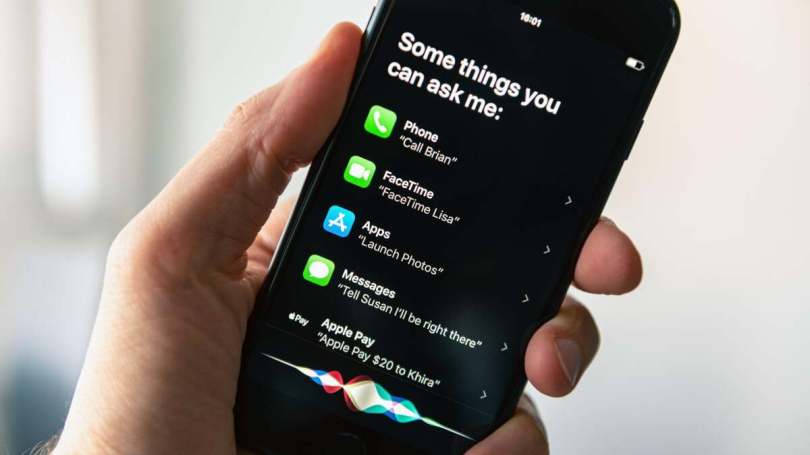
With Live Speech enabled, you can triple-tap the side button on iPhone or iPad, or click the Live Speech icon on the Mac menu bar (looks like a keyboard). Type your message, and it will be read out in your cloned voice. This feature works in Phone, FaceTime, and other compatible apps. A bookmark icon in the text input box allows you to access your saved phrases.

Enjoy the innovative possibilities of Personal Voice, whether you’re exploring new tech or seeking to enhance your accessibility options.

This Slow-Moving Robot Efficiently Cleans Up Cigarette Butts

VERO: The Cutting-Edge Robot Tackling Cigarette Butt Pollution

Every year, approximately six million cigarettes are smoked globally, resulting in an astonishing 4 trillion cigarette butts being discarded improperly. These small remnants, despite the tobacco being long gone, pose significant environmental hazards. Each butt can leach over 700 toxic chemicals into the surroundings, making cleanup a critical issue.

Introducing VERO: A New Solution to an Old Problem

In response to this environmental challenge, researchers at the Italian Institute of Technology (IIT) in Genoa have developed a pioneering solution: VERO, which stands for “Vacuum-cleaner Equipped Robot.” This innovative robot is designed to address the pervasive issue of cigarette butt pollution with a novel approach.

The Design and Functionality of VERO

VERO employs a familiar four-legged robot design, specifically the Unitree AlienGo unit, which is adapted with a unique feature—a vacuum cleaner system. This vacuum system, worn as a backpack, includes a nozzle on each of its four feet. Each nozzle is custom-designed and 3D-printed to ensure that VERO can clean as close to the ground as possible without compromising its mobility.

Advanced Training and Neural Networks

Training VERO to effectively use its vacuum system presented a significant challenge. According to a paper published in The Journal of Field Robotics in April, the researchers developed a sophisticated neural network to process visual data from VERO’s onboard cameras. This network is crucial for distinguishing cigarette butts from other debris in cluttered environments and avoiding false positives.

Once VERO identifies a cigarette butt, it must navigate its environment to position one of its nozzles within suction range while maintaining balance with its other limbs. Unlike many wheeled robots, VERO is designed to handle uneven terrain, stairs, and other obstacles, requiring careful maneuvering to avoid tipping over.

Performance and Future Potential

VERO has achieved an impressive nearly 90 percent accuracy rate in various scenarios. While it may not be the fastest quadrupedal robot available, its specialized functionality and effectiveness in collecting cigarette butts make it a valuable asset for litter cleanup.

Beyond its current application, VERO holds potential for other uses. Researchers envision it assisting with tasks such as weed spraying in agriculture, infrastructure inspections, and even construction projects like rivet attachment or nail driving.

As the world continues to grapple with the environmental impact of cigarette butts, VERO represents a significant advancement in robotic waste management, offering a glimpse into the future of automated cleanup and maintenance solutions.