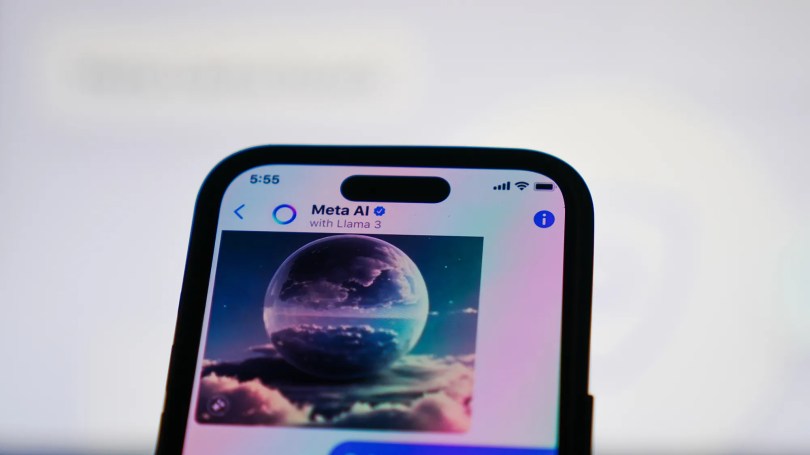
Meta AI Will Continue Using Your Content Despite Outrage on Instagram

The Revelation and Backlash

Last month, Meta revealed a surprising shift in its use of Instagram content. The company admitted that images uploaded by users, including original artworks, are now utilized to train its AI image generator. This disclosure, made public by Meta executive Chris Cox during a Bloomberg interview, has ignited significant backlash from creators. Over 130,000 Instagram users have shared a message on the platform protesting against Meta’s use of their data for AI training. However, these objections reflect a misunderstanding of the terms users agreed to when joining the platform.

The Reality of Copyright and User Consent

Creator’s Discontent

The protest began with a viral Instagram template allowing users to quickly share a message stating: “I own the copyright to all images and posts submitted to my Instagram profile and therefore do not consent to Meta or other companies using them to train generative AI platforms. This includes all future AND past posts. @Instagram get rid of the Ai program.”

Understanding User Rights

While the sentiment is clear, it overlooks a crucial detail: Instagram’s terms of service grant Meta extensive rights to user content. Although Instagram doesn’t claim outright ownership, users provide Meta with a broad license to use, modify, and create derivative works from their content. This license explicitly includes the use of content for training AI models.

Peter K. Yu, a Texas A&M Regents Professor of Law and Communication, explained that the license users grant is non-exclusive, royalty-free, transferable, sub-licensable, and worldwide. This means that even though users retain copyright, Meta has significant freedom to use the content in various ways, including for AI training.

How Meta Uses Public Data

Training AI with Public Content

Meta’s AI training process involves a vast array of data, including public posts from Instagram and Facebook. Chris Cox clarified that while Meta does not use private data, public posts, comments, and captions contribute to AI model development. This practice is consistent with Meta’s privacy policy and terms of service, which were updated last month to reflect their approach to AI training.

Comparison with Competitors

Meta’s extensive user base provides it with a rich source of data, giving it a competitive edge over other AI developers. Unlike competitors, Meta’s access to millions of users’ publicly shared content allows it to refine its AI tools more effectively. This data usage mirrors past practices where publicly available posts significantly contributed to AI advancements.

The Creator’s Dilemma

Legal and Practical Implications

Artists and creators have expressed frustration, with some threatening to leave Instagram if their concerns aren’t addressed. Despite their protests, the legal framework does not offer much recourse for content shared on social media platforms. Users’ options to opt out of AI training are limited, and private account settings do not retroactively affect previously public posts.

Current Options and Limitations

Meta offers tools to control data usage, such as requesting the removal of third-party data or objecting to its use in AI training. However, these measures do not apply to first-party data shared directly on Meta platforms. Users can make their accounts private to limit data access, but this does not affect data already collected from public posts.

The Bigger Picture of Consent Online

The Complexity of Digital Consent

The confusion surrounding consent highlights a broader issue with modern internet practices. Helen Nissenbaum, a technology philosopher, notes that dense terms of service and opaque data privacy practices leave users uncertain about what they are consenting to. A 2017 Deloitte survey found that 91% of US consumers agree to terms of service without fully reading them, underscoring a critical gap between user expectations and actual data practices.

The Evolving Landscape

As AI technology and data practices evolve, understanding and managing consent becomes increasingly complex. While users’ objections to Meta’s data usage reflect a desire for greater control, the current system often leaves them with limited options to protect their digital content.


Militarized Cybertruck Police Vehicles Set To Debut

Introduction to the Cybertruck Police Concept

Militarized Cybertrucks, envisioned as futuristic patrol vehicles, may soon become a reality on American streets. Tesla CEO Elon Musk has long championed the idea, and now, California-based Tesla modification company Unplugged Performance is making it a tangible option. The company is offering specialized “upfitting” packages to convert Cybertrucks into tactical response vehicles for police and private security forces.

The Rise of Tactical Cybertrucks

On May 30, 2024, Cybertruck Owners Club member “UP_Frank” shared a video of a modified Cybertruck featuring police-grade modifications, including flashing LED light bars. The modifications, courtesy of Unplugged Performance’s UP.FIT subsidiary, signal a growing trend of customizing the Cybertruck for law enforcement use.

Cybertruck: A Sci-Fi Inspired Patrol Vehicle

Since its debut, the Cybertruck has been associated with a dystopian, sci-fi aesthetic. Elon Musk has described it as “an armored personnel carrier from the future” and touted it as “the finest in apocalypse technology.” Despite its base model being priced at $60,990 and not specifically designed for police use, Musk’s endorsement of Cybertrucks for patrols has generated significant interest. This concept was further supported by Oracle co-founder Larry Ellison.

Unplugged Performance’s New Market

Unplugged Performance, known for Tesla vehicle modifications since 2013, has recently ventured into the law enforcement sector. The company has partnered with the Anaheim Police Department to provide upgraded Tesla Model Y vehicles and is now focusing on developing Cybertruck packages through its UP.FIT division. These packages cater to various needs, including patrol, administrative, and tactical operations.

Customization and Cost

The UP.FIT service packages offer extensive upgrades for Cybertrucks, including rifle and shotgun mounts, pursuit-rated tires, and advanced siren systems. The cost of a fully outfitted Cybertruck could exceed $90,000, compared to approximately $47,000 for a new Ford Explorer 4WD Police Interceptor. While UP.FIT’s website does not list specific prices, similar upgrades for the Cybertruck can be costly. For example, a 50-inch LED light bar is priced at $1,293.75, and a front bull bar costs $1,995.

Law Enforcement’s Enthusiasm

Law enforcement agencies are already showing interest in these high-tech patrol vehicles. The Rosenberg, Texas Police Department recently showcased a Cybertruck in their area, soliciting opinions from Elon Musk. Musk’s positive response, marked by a “100-percent” emoji, reflects his support for the initiative.

Looking Ahead

Unplugged Performance plans to showcase their Cybertruck police vehicles at upcoming industry events, offering law enforcement firsthand experience with the new technology. As Ben Schaffer, president of Unplugged Performance, indicates, there is much more news to come regarding their UP.FIT Cybertruck programs.

As the line between futuristic technology and practical law enforcement tools continues to blur, the advent of militarized Cybertrucks represents a bold step towards modernizing patrol vehicles.

OpenAI Disbands Team Focused on Preventing Rogue AI

OpenAI has recently disbanded its Superalignment Team, which was created to address potential existential risks associated with artificial intelligence. The decision, confirmed today by Wired and other sources, comes less than a year after the team’s establishment. Jan Leike, a former co-lead of the team, revealed the dissolution in a detailed thread on X, following his cryptic resignation announcement on May 15.

A Brief History of the Superalignment Team

The Superalignment Team was launched in July 2023, with the goal of managing the risks posed by superintelligent AI. OpenAI initially described this initiative as essential, noting that while superintelligent AI could potentially solve major global challenges, it also posed serious risks including the potential for human extinction. The team, led by Leike and OpenAI co-founder and chief scientist Ilya Sutskever, was tasked with developing strategies for AI governance and alignment.

Leadership Departures and Internal Disputes

Leike’s resignation and the subsequent disbandment of the team highlight ongoing internal disagreements at OpenAI. Leike cited fundamental disagreements with OpenAI’s leadership regarding the company’s core priorities as a key factor in the team’s dissolution. Sutskever, who also co-led the Superalignment Team, has since left the company, reportedly over similar concerns. The remaining team members have been reassigned to other research groups.

Contradictions in OpenAI’s Approach

Despite the emphasis on AI risks, OpenAI, along with competitors like Google and Meta, continues to showcase advancements in AI technology. Recent releases include GPT-4o, a multimodal generative AI system capable of generating lifelike responses. This emphasis on cutting-edge developments contrasts with the company’s warnings about the dangers of “rogue AI.” Critics argue that while AI companies push forward with new technologies, they may be neglecting serious safety concerns.

The Broader Implications and Industry Reactions

The exact reasons behind the shutdown of the Superalignment Team remain unclear, but recent internal power struggles suggest significant differences in opinion on how to advance AI technology safely. Critics of the AI industry point out that the technology, while not yet self-aware, is already impacting issues such as misinformation, content ownership, and labor rights. As AI systems become more integrated into various sectors, society faces growing challenges in managing their consequences.

In summary, the disbandment of OpenAI’s Superalignment Team underscores the complex balance between technological innovation and safety. As the AI industry evolves, it will be crucial for companies and regulators to address these challenges while ensuring that advancements do not outpace the measures needed to mitigate potential risks.

Breakthrough Technology Promises to Revolutionize MRI Machines by Reducing Their Size

Magnetic resonance imaging (MRI) machines are essential in modern medicine, yet their large size and high cost have historically limited their availability. Traditional MRI systems rely on bulky superconducting magnets made from copper and niobium-tin alloy, which contribute to their expense and physical footprint. As a result, these advanced machines are typically confined to well-funded hospitals with dedicated space.

Breakthrough in Superconducting Magnets

Recent advancements from researchers at King’s College London, in collaboration with several Japanese universities, promise to change this landscape. The team has developed a new, cost-effective iron-based superconducting magnet that significantly reduces the energy required to operate MRI machines. Detailed in a study published on June 7 in NPG Asia Materials, this innovative prototype is 2.7 times more powerful than existing iron-based magnets and meets the rigorous stability and strength requirements necessary for MRI applications.

The Role of Machine Learning

The success of the new iron superconductor magnet owes much to the application of machine learning (ML). Researchers employed an ML system called BOXVIA to enhance their magnet design. By training BOXVIA on various parameters from previous experiments—such as heat and fabrication time—the system identified weaknesses and potential improvements. BOXVIA’s refined approach led to the discovery of a novel structural design that uses varying sizes of iron crystals, which deviates from the traditional uniform crystal rates.

“[Our] process lays the groundwork for manufacturers to produce these magnets quickly and at a lower cost, potentially increasing the availability of MRI machines,” said Mark Ainslie, an engineering professor at King’s College and a co-author of the study.

Expanding Accessibility and Future Applications

The new design not only promises more affordable MRI machines but also paves the way for smaller, more accessible tools that could be used in general practitioners’ offices. Although superconducting magnets still require cooling to extremely low temperatures—around 5 Kelvin (-450.76°F)—the advancements made could lead to faster production and broader industrial applications.

Looking ahead, researchers will continue to investigate the unique nanostructures revealed by machine learning to further understand their superconductive properties. These findings could lead to even more powerful and efficient superconducting magnets in the future, potentially benefiting not only medical imaging but also fields like nuclear fusion, electric aviation, and maglev transportation.

Revolutionary Device Lets Users Control Mouse Cursor with Their Tongue

Recent innovations in brain-computer interfaces (BCIs) have made headlines, but a new device is offering a more accessible alternative for individuals with physical disabilities: the MouthPad. Developed by MIT graduate Tomás Vega and his company Augmental, the MouthPad is a cutting-edge device that enables users to control a computer cursor using simple tongue movements.

From Personal Experience to Innovative Solution

Tomás Vega, CEO and co-founder of Augmental, has long been driven by a desire to enhance human capabilities through technology, inspired by his own experience with a stutter at the age of five. After an internship with Neuralink, Vega explored the potential of brain implants but found their complexity and cost limiting. This led him to consider a more straightforward and practical approach.

Harnessing the Power of the Tongue

Vega identified the tongue as a promising interface due to its substantial representation in the brain and its muscle composition. “The tongue comprises eight muscles, with most muscle fibers being slow-twitch, meaning they fatigue less quickly,” Vega explained. This insight led to the development of the MouthPad, a 3D-printed retainer made from dental-grade materials and equipped with advanced sensors.

MouthPad: How It Works

The MouthPad functions as a mouth-based computer mouse, allowing users to navigate their computer with their tongue. It offers a range of controls:

  • Scrolling: Move the cursor in any direction with tongue movements.
  • Right-click: Perform a right-click by making a sipping motion.
  • Left-click: Execute a left-click by applying pressure to the palate.

The device’s high degree of customization allows it to accommodate various physical abilities, including adaptations for biting, clenching, and movements tracked by neck and head movements.

Future Developments and Goals

Vega and Augmental aim to seek FDA approval to expand MouthPad’s functionality to include control over robotic arms and wheelchairs. With FDA clearance, the MouthPad could become eligible for medical insurance reimbursement, making it accessible to a broader range of users. Future versions may also incorporate more nuanced physical interactions, such as whispers and subtle internal speech organ movements, offering a significant advancement for individuals with speech impairments or compromised lung function.

By combining innovative technology with practical usability, the MouthPad represents a major leap forward in assistive devices, promising greater independence and control for individuals with physical disabilities.

AI Contenders Enter the Political Arena

In the UK, an unconventional political contender named “Steve” is stirring up the political landscape. Advocating for a four-day work week and incentives for switching to electric cars, Steve isn’t your typical candidate. In fact, Steve is not human at all. This AI-powered chatbot offers Brighton Pavilion voters the chance to engage via online voice chat. Behind Steve, and other AI candidates like him, are creators who believe that advanced language models from companies like OpenAI and Google might better represent voter views than traditional human politicians.

The Legal and Practical Challenges

Running an AI for political office presents significant hurdles. The legality of an AI candidacy is uncertain, and the feasibility of a software program handling everyday political tasks is questionable. Even if these AI candidates manage to overcome these challenges, they must prove they can avoid common AI issues such as fabricating facts and perpetuating biases. Currently, it seems more likely that these AI candidates will be remembered as gimmicks rather than serious contenders.

AI Steve: A New Breed of Politician?

AI Steve, vying for a UK parliamentary seat as an Independent, is based on British businessman Steve Endacott. Created by Neural Voice, a company led by Endacott, AI Steve engages voters in conversations about policies and allows them to suggest new ones. Endacott envisions AI Steve as a tool to enhance representative democracy by holding up to 10,000 simultaneous conversations and using these interactions to shape policy. However, AI Steve’s inability to physically vote or attend events means Endacott will take on these roles himself, raising legal and ethical questions.

Virtual Integrated Citizen: The Proxy Candidate

In Cheyenne, Wyoming, voters might soon encounter the “Virtual Integrated Citizen” (VIC) in the mayoral race. Developed by local librarian Victor Miller, VIC operates on OpenAI’s GPT-4 and claims an “IQ” of 155. Due to local laws prohibiting nonhumans from holding office, VIC cannot be directly elected. Instead, Miller will appear on the ballot and intends to let VIC handle all decision-making if elected, effectively serving as a human proxy for the AI.

Yas Gaspadar: The Symbolic Protest Candidate

In Belarus, an AI chatbot named Yas Gaspadar is running for parliament. Created by Sviatlana Tsikhanouskaya, leader of the anti-authoritarian opposition, Yas Gaspadar advocates for democracy, education investment, and free elections. This AI candidate, designed as a protest symbol, cannot be arrested, making it a potent symbol against the current regime.

The Promise and Peril of AI Politicians

AI candidates theoretically offer the ability to analyze extensive documents and generate informed policy recommendations. If AI can address current issues like misinformation and bias, it might provide a more accurate representation of voter interests. However, AI models are still prone to errors and “hallucinations,” where they generate incorrect information as facts. Furthermore, AI candidates might struggle with the human aspects of politics, such as negotiation and personal interaction.

Voter reception to AI candidates remains mixed. Recent examples, like a chatbot mishap in New York, highlight public skepticism. Polls indicate significant concern about AI’s role in spreading misinformation and its overall impact on daily life. As AI continues to evolve, its place in politics will be closely watched, but for now, these candidates may be more about spectacle than substantive change.

Voyager 1 Surprises Again – The Spacecraft Resumes Communication Against All Odds

Voyager 1’s Remarkable Comeback

Voyager 1 has stunned the scientific community once again. After more than six months of technical difficulties that suggested a potential end to its groundbreaking mission, NASA has announced that all four of the spacecraft’s instruments are back online and performing normal science operations. As of June 13, Voyager 1 is back to studying interstellar particles, magnetic fields, and plasma waves. While there are still minor issues to address, including resynchronizing the probe’s timekeeping software and maintaining a digital tape recorder, the spacecraft’s ability to return “usable science data” marks an extraordinary recovery.

Challenges and Repairs

The Voyager 1 team faced significant challenges following the detection of technical issues in November 2023. The probe’s flight data subsystem telemetry module unit was malfunctioning, and with a communication delay of approximately two days due to Voyager 1’s current distance of over 15 billion miles from Earth, resolving these issues was no small feat. In April 2024, after engineers managed to partially restore the spacecraft’s ability to send back engineering data, they initiated a second phase of repairs on May 19. By then, two of the four scientific instruments were functioning normally, with the remaining instruments requiring additional adjustments.

An Unexpected Legacy

Voyager 1, along with its sibling Voyager 2, was launched in 1977 with the primary goal of conducting a five-year mission to study Saturn and Jupiter. The spacecraft far exceeded expectations, with Voyager 2 achieving an unplanned flyby of Neptune in 1989 and both spacecraft eventually crossing into interstellar space. Now, over 45 years after their launch, the Voyager probes continue their pioneering journey, surpassing their original mission lifespan and even outliving some of their creators. Notably, Ed Stone, the mission’s project scientist for half a century, passed away on June 8 at age 88.

A Tribute to Voyager’s Journey

Reflecting on the Voyager missions, Stone expressed gratitude to the global community for their support. “It has been a remarkable journey, and I’m thankful to everyone around the world who has followed Voyager and joined us on this adventure,” he stated upon his retirement in 2022. Voyager 1’s recent achievements are a testament to the enduring legacy of human ingenuity and exploration.

Explore the New AI Features Enhancing Siri on Your iPhone

The Next Wave of AI Enhancements for Siri on Your iPhone

As artificial intelligence continues to evolve, tech giants like Google, Microsoft, and Samsung are introducing groundbreaking tools. Apple is stepping into the spotlight with its own suite of AI features, branded as Apple Intelligence. This new suite aims to enhance Siri, Apple’s long-standing digital assistant, making it more intuitive and powerful.

With the launch of iOS 18 in September, Apple will begin rolling out these updates, though some features may take up to a year to fully debut. Here’s a closer look at what Siri will offer:


Enhanced App Control

Siri is about to gain deeper integration with your iPhone’s operating system. With iOS 18, you’ll be able to:

  • Rename Documents: Easily rename files in Pages through Siri commands.
  • Manage Tabs: Close Safari tabs or switch between open ones with a simple voice command.
  • Edit Photos: Apply enhancements to images in your Photos app.
  • Switch Cameras: Toggle between front and rear cameras seamlessly.

Additionally, Siri will understand the current content displayed on your screen, enabling you to execute tasks directly related to what you’re viewing. For instance, if you’re looking at an address, you can instruct Siri to “add this address to my contacts,” and it will know precisely what you mean.


Improved Natural Language Understanding

Siri’s ability to comprehend and respond to natural language is set to improve significantly. Expect:

  • Contextual Awareness: Siri will remember the context of your previous interactions, allowing for more fluid conversations. You can ask about the weather and then set a reminder for a related trip without repeating details.
  • Personalized Responses: Siri will understand and remember personal references, such as recognizing “mom” in a flight inquiry and pulling information from your communications.

This improved context-awareness will also help Siri manage commands like “play the podcast my wife sent me yesterday” or “show me the files James shared last week,” streamlining your access to information.


Typing and Enhanced Features

In addition to voice commands, Siri will offer more options for text-based interaction:

  • Type-to-Siri: This feature, accessible via a double tap on the navigation handle, will now be more convenient, allowing you to type commands just as you would speak them.
  • Integration with Apple Intelligence: Siri will be linked to other new AI features, such as generating AI images, creating custom emojis, and adjusting text tones. These functionalities will be controllable via Siri as well as through touch interactions.

Future Enhancements

The upcoming update includes more than just these core features:

  • Voice-Controlled Smart Devices: Future updates may enable Siri to control compatible smart home devices, including robot vacuum cleaners.

These improvements mark the most significant upgrade to Siri yet, potentially transforming how you interact with your iPhone. With Apple Intelligence leading the charge, managing tasks and accessing information will become more intuitive and efficient.

Older Americans Face Growing Risks of Fraud

In 2023, Americans aged 60 and older suffered over $3 billion in losses due to scams, according to the FBI. To put this staggering figure into perspective, it surpasses even the earnings from Taylor Swift’s record-breaking Eras Tour, which recently became the first concert tour to reach $1 billion in revenue.

As a geriatrician, I see firsthand how elder fraud has escalated to epidemic proportions. Many of my patients recount their experiences with scams, highlighting the severe emotional and psychological impacts of such crimes.

The Toll of Elder Fraud

The ramifications of elder fraud extend far beyond financial loss. Victims often grapple with trauma, shame, and self-doubt, which can erode personal relationships, diminish trust, and negatively affect mental and physical health.

The Rising Tide of Elder Fraud

Alarming Statistics

Recent FBI data reveals a sharp increase in elder fraud cases. In 2023, individuals over 60 reported 14% more complaints to the FBI’s Internet Crime Complaint Center (IC3) compared to the previous year, with financial losses rising by approximately 11%. However, these figures only scratch the surface, as many elder fraud cases go unreported or occur through less traceable methods like phone or mail scams.

Unique Vulnerabilities of Older Adults

Older adults are particularly susceptible to fraud for several reasons. They often possess significant savings, own property, and have good credit, making them prime targets. Additionally, older adults may lack familiarity with modern technologies, which exacerbates their vulnerability to digital scams.

Common Scams Targeting Older Adults

Tech-Support Scams

Tech-support scams emerged as the most prevalent form of elder fraud in 2023. These scams often involve fraudulent call centers and account for a significant portion of losses. Scammers use advanced technologies, such as voice cloning and deepfake videos, to deceive their victims more effectively.

Investment and Romance Scams

Investment scams, despite being less frequent, are among the most financially damaging, representing nearly half of all reported losses by older adults. Romance scams and online shopping frauds also continue to be significant concerns.

Identifying and Avoiding Scams

Recognizing Red Flags

To combat the rising tide of scams, vigilance and knowledge are key. Here are some FBI-approved tips for spotting and avoiding fraud:

  • Verify Imminent Threats: If you suspect immediate danger, contact the police right away.
  • Beware of Unsolicited Offers: Exercise caution with unsolicited calls, emails, and door-to-door pitches.
  • Avoid Suspicious Links and Attachments: Do not click on unsolicited links or open email attachments from unknown sources.
  • Research Sources: Verify the legitimacy of individuals or businesses by searching online for their credentials and offers.
  • Protect Personal Information: Never share personal details or financial information with unverified entities.
  • Update Security Software: Ensure your antivirus and security software are current.
  • Handle Pop-ups Carefully: Disconnect from the internet and shut down your device if you encounter suspicious pop-ups.
  • Limit Remote Access: Avoid granting remote access to your devices unless you are certain of the source’s legitimacy.
  • Resist Pressure: Scammers often create a false sense of urgency. Take your time to make financial decisions.
  • Trust Your Instincts: If something feels off, it likely is.

What to Do If You’ve Been Scammed

If you become a victim of fraud, act quickly to mitigate the damage:

  • Protect Your Identity: Contact your financial institutions to secure your accounts and monitor for unusual activity.
  • Report the Crime: File a report with your local FBI office or submit a tip online.
  • Document Everything: Provide detailed information about the scam, including communication methods, payment details, and any instructions given by the scammer.
  • Seek Support: Engage with support networks like the AARP Fraud Watch Network and the Cybercrime Support Network’s Peer Support Program. Professional counseling may also help manage emotional distress.

Remember, even experienced professionals are not immune to fraud. Former FBI director William Webster, at age 90, was also targeted. Sharing your experience can be a crucial step toward combating this pervasive issue.

For those affected by elder fraud, it’s important to seek help and support, and not to feel embarrassed about reporting the crime. By addressing these challenges openly, we can work together to fight this modern epidemic.

Identifying AI-Generated Videos: Key Signs to Look For

How to Identify AI-Generated Videos: Key Indicators

With the rise of generative AI, distinguishing between real and computer-generated content has become increasingly challenging. As AI tools like OpenAI’s Sora become more sophisticated, knowing how to spot AI-generated videos is crucial. Here’s a guide to help you identify whether a video might be AI-generated.


1. Inconsistent Text

Text Issues in AI Videos

AI-generated videos often struggle with incorporating text. Since AI doesn’t fully comprehend language the way humans do, text in these videos can appear garbled or nonsensical. If you spot text that looks out of place or resembles an alien language, it’s likely generated by AI.

Example: In a trailer by Luma AI, signage on buses and fair stalls includes nonsensical text, indicating that it was either generated poorly or manually edited after the fact.


2. Abrupt or Slow Cuts

Rapid or Slowed Action

AI videos frequently feature either very quick cuts or unnaturally slow sequences. Quick cuts are used to mask inconsistencies, while slow cuts can obscure the AI’s limitations. Both techniques aim to make the video appear more realistic than it is.

Example: In an AI-generated music video by Washed Out, rapid editing makes it difficult to notice subtle oddities, such as people merging into walls.


3. Unnatural Physics

Violations of Physical Laws

Generative AI often fails to replicate realistic physics. Look for people vanishing behind objects, inconsistent construction, or misaligned furniture. These issues arise because AI lacks a true understanding of 3D space and physical interactions.

Example: In a drone shot by Sora, a group of people merges into railings due to AI’s inability to accurately represent them as distinct entities.


4. The Uncanny Valley

Unnatural Realism

AI-generated videos can fall into the “uncanny valley,” where the visuals are almost but not quite real. This often manifests as unnatural movements or expressions, especially in characters that are generated rather than filmed.

Example: A Toys R Us film created with Sora AI features unnatural smiles and inconsistent appearance of a child, highlighting the artificiality of the AI’s representation.


5. Too Perfect or Imperfect Details

Flawless or Distorted Elements

AI can produce elements that are either unnaturally perfect or imperfect. Repeated patterns or overly polished designs can indicate AI generation. Conversely, AI often struggles with natural details, leading to awkward or unrealistic renderings.

Example: In a video from Runway AI featuring a running astronaut, the hands are particularly poorly rendered, alongside other issues with background physics and blurred text.


6. Verifying Context

Contextual Clues

Even with AI, traditional methods for spotting fakes apply. Check the source of the video—official accounts are generally more reliable. Cross-reference the video with other reports or angles and verify any featured individuals. For example, if there’s narration by a celebrity, check with the celebrity to confirm authenticity.


By applying these criteria, you can better navigate the digital landscape and discern whether the content you’re viewing is generated by AI or is genuine.