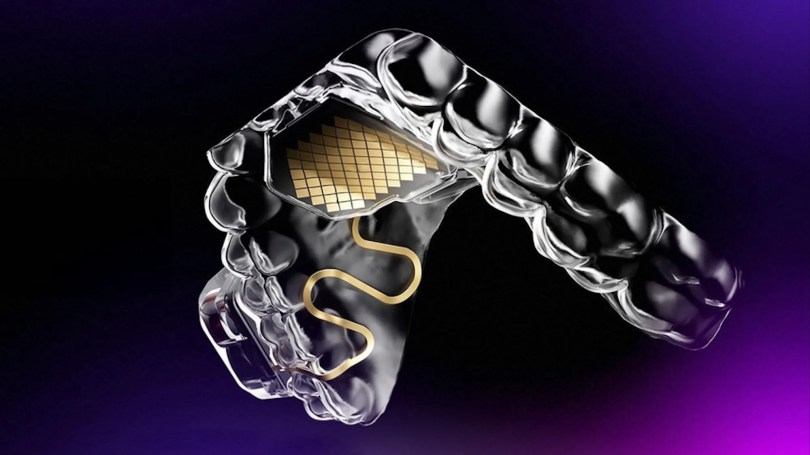
Recent innovations in brain-computer interfaces (BCIs) have made headlines, but a new device is offering a more accessible alternative for individuals with physical disabilities: the MouthPad. Developed by MIT graduate Tomás Vega and his company Augmental, the MouthPad is a cutting-edge device that enables users to control a computer cursor using simple tongue movements.
From Personal Experience to Innovative Solution
Tomás Vega, CEO and co-founder of Augmental, has long been driven by a desire to enhance human capabilities through technology, inspired by his own experience with a stutter at the age of five. After an internship with Neuralink, Vega explored the potential of brain implants but found their complexity and cost limiting. This led him to consider a more straightforward and practical approach.
- https://www.linkedin.com/pulse/vmware-5v0-2221-dumps-questions-pdf-definite-study-hacks-l8jye
- https://www.linkedin.com/pulse/vmware-5v0-2221-exam-questions-accurate-2024-easy-way-pass-lhnze
- https://www.linkedin.com/pulse/cisco-700-150-exam-questions-accurate-2024-easy-way-pass-3g2ke
- https://www.linkedin.com/pulse/cisco-700-755-dumps-questions-pdf-definite-study-hacks-tempelix-md91e
- https://www.linkedin.com/pulse/cisco-700-755-exam-questions-accurate-2024-easy-way-pass-tempelix-ombpe
- https://www.linkedin.com/pulse/cisco-700-760-exam-questions-accurate-2024-easy-way-pass-tempelix-gcdie
- https://www.linkedin.com/pulse/cisco-700-805-dumps-questions-pdf-definite-study-hacks-tempelix-bgf0e
- https://www.linkedin.com/pulse/vmware-5v0-3122-exam-questions-accurate-2024-easy-way-pass-p2i5e
- https://www.linkedin.com/pulse/cisco-700-760-dumps-questions-pdf-definite-study-hacks-encognitix-zzhne
- https://www.linkedin.com/pulse/cisco-700-150-dumps-questions-pdf-definite-study-hacks-encognitix-bknce
Harnessing the Power of the Tongue
Vega identified the tongue as a promising interface due to its substantial representation in the brain and its muscle composition. “The tongue comprises eight muscles, with most muscle fibers being slow-twitch, meaning they fatigue less quickly,” Vega explained. This insight led to the development of the MouthPad, a 3D-printed retainer made from dental-grade materials and equipped with advanced sensors.
MouthPad: How It Works
The MouthPad functions as a mouth-based computer mouse, allowing users to navigate their computer with their tongue. It offers a range of controls:
- Scrolling: Move the cursor in any direction with tongue movements.
- Right-click: Perform a right-click by making a sipping motion.
- Left-click: Execute a left-click by applying pressure to the palate.
The device’s high degree of customization allows it to accommodate various physical abilities, including adaptations for biting, clenching, and movements tracked by neck and head movements.
Future Developments and Goals
Vega and Augmental aim to seek FDA approval to expand MouthPad’s functionality to include control over robotic arms and wheelchairs. With FDA clearance, the MouthPad could become eligible for medical insurance reimbursement, making it accessible to a broader range of users. Future versions may also incorporate more nuanced physical interactions, such as whispers and subtle internal speech organ movements, offering a significant advancement for individuals with speech impairments or compromised lung function.
By combining innovative technology with practical usability, the MouthPad represents a major leap forward in assistive devices, promising greater independence and control for individuals with physical disabilities.
 Trending Wires