AI

Copyright Group Shuts Down Dutch Language AI Dataset

Introduction: Action Against Unlawful Data Use

On Tuesday, Dutch copyright enforcement group BREIN announced the removal of a significant language dataset that was being offered for AI model training. The dataset contained unauthorized information gathered from various sources, raising concerns over copyright violations.

Unauthorized Content in the Dataset

BREIN revealed that the dataset included material collected without consent from tens of thousands of books, news websites, and Dutch language subtitles from numerous films and TV series. This extensive collection of copyrighted content led to the group’s swift action to prevent further misuse.

Challenges in Tracking Dataset Usage

Bastiaan van Ramshorst, Director of BREIN, expressed uncertainty about the extent to which AI companies may have already utilized the dataset. “It’s very difficult to know, but we are trying to be on time,” he told Reuters, emphasizing the importance of proactive measures to avoid future legal challenges.

Implications of the EU AI Act

Van Ramshorst also highlighted the forthcoming European Union AI Act, which will require AI companies to disclose the datasets used in training their models. This regulation aims to enhance transparency and accountability in the AI industry.

Global Context: Similar Cases in the U.S. and Denmark

The issue of copyright infringement in AI training is not limited to the Netherlands. In the United States, OpenAI, backed by Microsoft, is facing several lawsuits, including one from The New York Times, for allegedly using copyrighted material without permission. Similarly, in Denmark, the Danish Rights Alliance successfully forced the removal of a large dataset known as “Books3” last year.

Resolution: Cease and Desist Compliance

The individual responsible for offering the Dutch dataset agreed to comply with a cease and desist order and promptly removed the content from the website where it was available for download. BREIN did not disclose the individual’s identity, citing Dutch privacy laws.

Conclusion: A Warning to the AI Industry

BREIN’s actions serve as a reminder to the AI industry about the importance of respecting copyright laws. As regulations tighten and enforcement actions increase, AI companies must ensure that the datasets they use for training are legally obtained and properly documented.


Pixel phones

Google Unveils Upgraded Pixel Phones, Aiming to Harness AI Power

Introduction: A New Era for Pixel Phones

Google introduced its latest Pixel smartphone lineup on Tuesday, showcasing deeper integrations of its artificial intelligence (AI) technology. This launch marks a significant step in Google’s ongoing efforts to embed AI into its hardware, aiming to enhance user experience and keep pace with industry rivals.

Key Features: AI at the Core

One of the standout features of the new Pixel phones is a Pixel-exclusive tool that allows users to search for information within screenshots. Additionally, Android users can now access Google’s chatbot, Gemini, as an overlay on other apps to answer questions or generate content on the fly. This integration underscores Google’s commitment to making AI more practical and accessible.

A New Approach to AI Integration

“There have been so many promises and so many ‘coming-soons,’ but not enough real-world helpfulness when it comes to AI, which is why today we’re getting real,” said Rick Osterloh, Google’s Senior Vice President of Devices and Services. Speaking to an audience of engineers, executives, analysts, and media at Alphabet’s Bay View campus in Mountain View, California, Osterloh declared, “We’re fully in the Gemini era.”

Breaking Tradition: Early Launch

In a departure from tradition, Google announced the new Pixel models in the summer rather than the autumn, a first since the device’s 2016 debut. This move reflects Google’s urgency to stay competitive, particularly as rivals like Apple prepare to launch their own AI-enhanced products.

Analysts’ Reactions: A Complete Showcase

Avi Greengart, Lead Analyst at Techsponential, praised the event, noting, “I’ve been to a lot of Google events, and not only was this one of the most elaborate, but it was one of the most complete.” He emphasized that Google demonstrated its leadership in AI through these new offerings.

Competing with Apple: The Race for AI Dominance

The timing of Google’s event comes just ahead of Apple’s planned launch of a new iPhone in September. Apple has already announced that its latest devices will feature “Apple Intelligence,” a suite of generative AI-powered tools integrated into native applications and linked with Microsoft-backed OpenAI’s ChatGPT.

Live Demonstrations: Gemini in Action

Google’s event included live demos of new Gemini functions, such as voice conversations. However, not everything went smoothly—an attempt to use Gemini to cross-reference a concert poster with the calendar app required three tries and two devices to succeed, highlighting the challenges of real-time AI integration.

Pricing and Availability: What’s New in Pixel 9

The Pixel 9, with a 6.3-inch display, starts at $799, which is $100 more than its predecessor. The 6.8-inch Pixel 9 Pro XL, featuring additional enhancements like an improved camera, and the foldable Pixel 9 Pro Fold will begin shipping later in August, with the Pixel 9 Pro Fold available in September. All devices are available for preorder as of Tuesday.

Expanded Product Line: New Devices and Features

In addition to smartphones, Google also unveiled the Pixel Watch 3 and Pixel Buds Pro 2 wireless earbuds. A notable addition to the Pixel Watch is the “Loss of Pulse” feature, which uses algorithms to detect if a user’s heart has stopped and can automatically contact emergency services. This feature will be available in the United Kingdom and the European Union.

Partnership with Peloton: Enhancing Fitness Offerings

Google also announced a content partnership with Peloton, the fitness company known for its stationary bikes. Subscribers to Google’s Fitbit Premium service will gain access to Peloton’s extensive library of training classes, further expanding Google’s footprint in the fitness tech space.

Conclusion: Google’s Strategic Shift

With the launch of its new Pixel phones and expanded product line, Google is making a clear bid to solidify its position in the AI-driven future of consumer technology. As it continues to enhance its devices with AI capabilities, Google is also addressing the growing demand for practical, user-friendly AI solutions that can manage daily life and boost productivity.

Cisco

Cisco Projects Rebound in Equipment Demand Announces 7% Global Workforce Reduction

On Wednesday, Cisco Systems announced a 7% reduction in its global workforce, coinciding with a rebound in demand for its networking equipment. The company is strategically shifting its focus toward high-growth sectors like AI and cybersecurity, which led to the decision to cut jobs globally.

Positive Market Response

Following the announcement, Cisco’s shares rose by 5% in extended trading. The company also issued an optimistic revenue forecast for the current quarter, signaling a recovery from recent challenges.

CEO’s Insights on Demand and Market Conditions

CEO Chuck Robbins addressed analysts, stating, “Inventory digestion is complete, and we’re now returning to a more normalized demand environment.” This marks a significant shift after Cisco struggled with supply-chain disruptions and a decrease in demand following the pandemic.

Efforts to Diversify and Reduce Hardware Reliance

Cisco has been actively working to decrease its dependence on its vast networking equipment business. The sector had been under pressure due to global supply-chain issues and a post-pandemic slowdown. Earlier this year, Cisco announced a 5% reduction in its global workforce, cutting over 4,000 jobs. The latest round of layoffs, confirmed this Wednesday, is part of a broader restructuring effort aimed at focusing on software, services, AI, and cybersecurity.

Financial Impact and Restructuring Costs

The San Jose-based company estimates that the restructuring plan will result in pre-tax charges of up to $1 billion, with $700 million to $800 million expected to be recognized in the first quarter. According to Michael Ashley Schulman, Chief Investment Officer at Running Point Capital, the layoffs will help Cisco “maintain focus on growth areas while balancing its financial obligations and reducing the percentage of hardware in its product mix.”

Revenue Projections and Market Performance

Cisco forecasts first-quarter revenue between $13.65 billion and $13.85 billion, surpassing analysts’ average expectations of $13.71 billion, according to LSEG data. For the fourth quarter, the company reported revenue of $13.64 billion, exceeding estimates of $13.54 billion. The adjusted profit per share came in at 87 cents, slightly above the forecast of 85 cents.

Strategic Acquisitions and Investments

To further accelerate its diversification efforts and capitalize on the AI boom, Cisco made its largest-ever acquisition last year, purchasing cybersecurity firm Splunk for approximately $28 billion. In June, the company also launched a $1-billion fund to invest in AI startups, including Cohere, Mistral AI, and Scale AI.

Conclusion

Cisco’s latest moves highlight its commitment to evolving in a rapidly changing market. By strategically reducing its workforce and investing in high-growth areas, the company aims to strengthen its position in AI and cybersecurity while continuing to deliver strong financial performance.

Google

Google Expands AI-Powered Search Features to New Regions

Google’s parent company, Alphabet, announced on Thursday that it is expanding its AI-generated summaries for search queries to six additional countries. This move comes just two months after the company scaled back some of its AI capabilities due to issues that arose during the initial launch.

AI Overviews: A Brief History

In May, Google made its AI Overviews feature available to all users in the United States. This feature, which displays AI-generated summaries at the top of search results pages, was the result of a year-long trial of a more limited version. However, the feature faced significant criticism after screenshots of inaccurate answers, such as a pizza recipe listing glue as an ingredient, spread across the internet. There was also a widely circulated incorrect statement that former U.S. President Barack Obama is Muslim.

Google’s Response to Initial Criticism

Google quickly acknowledged the errors, referring to them as “odd and erroneous overviews.” In a late May blog post, the company outlined updates to the feature, including stricter guidelines on which queries would trigger AI-generated answers. Additionally, user-generated content from sites like Reddit was no longer being used as source material for these answers.

Positive User Feedback Despite Initial Hiccups

Despite the rocky start, Hema Budaraju, Google’s Senior Director of Product, emphasized in a recent interview that the quality of the AI Overviews is improving. According to internal data, users with access to the feature reported higher satisfaction levels and engaged in longer, more specific searches compared to users without the feature.

Global Expansion: New Countries and Languages

The AI Overviews feature will now be available in Brazil, India, Indonesia, Japan, Mexico, and the United Kingdom. It will be accessible in local languages, including Portuguese and Hindi.

Enhancements to the AI Overviews Feature

Google is also introducing more hyperlinks within the AI Overviews. Websites will now be displayed on the right side of the AI-generated answer, and the company is testing an update that will include links directly within the text of the overview. These changes are part of Google’s efforts to “prioritize approaches that drive traffic to relevant websites,” as noted in a blog post on Thursday.

Concerns from the Media Industry

These updates come amid ongoing concerns from the media industry about the potential loss of referral traffic due to AI-generated search features. However, Budaraju expressed confidence that the new update would benefit Google, consumers, and publishers alike.

Broader Context: Legal and Competitive Challenges

This announcement follows a ruling by a U.S. judge last week, which determined that Google holds an illegal monopoly on search. This ruling could lead to a trial that may result in the breakup of Alphabet. At the same time, Google faces increasing competition from AI advances by rivals, such as OpenAI, which is backed by Microsoft.

Conclusion

As Google continues to refine and expand its AI-generated search features, it must navigate both internal challenges and external pressures from legal and competitive forces. The company’s latest updates aim to enhance user experience while addressing the concerns of the media industry, setting the stage for the next chapter in AI-powered search.

The Phageome

The Phageome – Unveiling The Secret World Within Your Gut

The human gut is a bustling ecosystem, home to trillions of tiny life forms that make up the microbiome. While we often focus on the bacteria residing there, it turns out these bacteria have their own predators: viruses. These viral invaders, known as bacteriophages, or simply “phages,” play a crucial role in the balance of our gut health.

Introducing the Phageome: A Viral Frontier

Phages are not just a minor presence in our digestive system; they number in the billions, possibly even trillions. They are so prevalent that scientists have coined a term for this viral ecosystem within our gut: the phageome. According to Breck Duerkop, a bacteriologist at the University of Colorado Anschutz School of Medicine, research on the phageome has rapidly expanded, revealing a staggering diversity of these viruses. Scientists are beginning to explore how harnessing or targeting specific phages could improve human health.

The Good, the Bad, and the Mysterious

Paul Bollyky, an infectious disease physician and researcher at Stanford Medicine, believes there are both beneficial and harmful phages within our gut. However, much remains unknown, including the exact number of phages that reside in the gut. Some bacteria carry phage genes without actively producing viruses, living with these genetic hitchhikers in their DNA.

A significant challenge in phage research is identifying the many unknown viruses within the phageome, often referred to as its “dark matter.” The Gut Phage Database already contains over 140,000 phages, but this is likely just the tip of the iceberg. Colin Hill, a microbiologist at University College Cork in Ireland, emphasizes the extraordinary variety of these phages.

Uncovering Phages: CrAssphages and Beyond

Scientists discover phages by analyzing genetic sequences from human fecal samples. This approach led to the identification of the most common gut phage group, crAssphage. Despite its name, which comes from the “cross-assembly” technique used to isolate its genes, crAssphage is a significant player in the gut ecosystem. Hill and his colleagues recently detailed its unique structure, featuring a light-bulb shape with a 20-sided body and a stalk for injecting DNA into host bacteria.

While it’s not yet clear how crAssphages impact human health, they infect Bacteroides, one of the most common groups of gut bacteria. Other phages, such as Gubaphage and LoVEphage, also target Bacteroides, suggesting a complex interplay between these viruses and their bacterial hosts.

The Phage-Bacteria Dance: A Symbiotic Relationship

Phages and bacteria have a more nuanced relationship than previously thought. Colin Hill describes it not as a battle but as a dance, where both partners influence each other’s movements. Phages can even benefit bacteria by introducing new genes. When a phage infects a bacterium, it sometimes packages bacterial genes into its protein shell along with its own genetic material. These transferred genes can enhance the bacteria’s abilities, such as providing antibiotic resistance or enabling them to digest new substances.

Phages also play a role in keeping bacterial populations in check. Like predators in a forest ecosystem, phages prevent any single bacterial species from becoming too dominant. For instance, Bacteroides bacteria constantly alter their sugary outer coats to evade phages, resulting in a diverse population capable of adapting to various challenges within the gut.

The Phageome’s Role in Gut Health

Phages are essential for maintaining the delicate balance of the gut ecosystem. When this predator-prey relationship is disrupted, it can lead to health issues. Research has shown that changes in the phageome are associated with conditions like inflammatory bowel syndrome (IBS), irritable bowel disease, and colorectal cancer. In cases of IBS, for example, the viral diversity within the gut is often reduced.

While some people attempt to rebalance their gut microbiome through diet or fecal transplants, targeting specific phages could offer a more precise solution. Scientists are already exploring therapeutic phages to combat bacteria that cause ulcers, demonstrating the potential of phage therapy.

Embracing the Phageome: The Unsung Heroes of Gut Health

The trillions of phages in your gut are silent guardians of your digestive health. Without them, a few bacterial species could dominate, leading to digestive problems and discomfort. The phageome, with its wild diversity and intricate dance with bacteria, plays a vital role in keeping our gut ecosystem in harmony.

So, the next time you think about gut health, remember the phageome—a hidden kingdom that is essential for the well-being of both bacteria and humans alike.

Bananas

Scientists Race To Save Bananas From Extinction

Bananas, a staple in fruit bowls around the world, are facing a dire threat. A deadly fungal pathogen is putting a popular banana variety at risk of extinction. The disease, Fusarium wilt of banana (FWB), disrupts the nutrient flow to the fruit, causing it to wither and die. This isn’t the first time the pathogen has wreaked havoc; in the 1950s, it nearly wiped out the commercial banana industry by decimating the Gros Michel banana species.

A Ray of Hope: New Research Offers Insights

Despite the grim situation, recent research brings some hope for bananas. An international team of scientists has uncovered the molecular mechanisms of the fungus responsible for this devastation. Their findings, published in the journal Nature Microbiology on August 16, could pave the way for new treatments and strategies to combat the pathogen.

Understanding the Culprit: What’s Hurting Bananas?

The fungus causing these crop failures is Fusarium oxysporum f.sp. Cubense (Foc) tropical race 4 (TR4). Commonly known as Foc TR4, this pathogen is notorious for its destructive impact on banana crops. In the 1950s, it wiped out the Gros Michel banana species, and now it’s threatening the world’s most popular banana, the Cavendish.

Foc TR4 is particularly dangerous because once it infects a banana field, it’s nearly impossible to eradicate. This makes future Cavendish banana production highly challenging.

The Power of the Genome: How the Fungus Evolves

The virulence of Foc TR4 lies in its genome. According to Li-Jun Ma, a molecular biologist at the University of Massachusetts Amherst and co-author of the study, the genome of Fusarium oxysporum is divided into two parts: the core genome and the accessory genome. The core genome handles essential functions, while the accessory genome varies from strain to strain, allowing the fungus to specialize in infecting specific plants.

By understanding how this pathogen operates at the molecular level, scientists can develop strategies to prevent further banana species from being wiped out.

Not Your Grandparents’ Bananas: The Evolution of the Fungus

The Gros Michel banana was the first victim of this fungal pathogen over 50 years ago. To combat banana wilt, the Cavendish variety was introduced as a disease-resistant replacement and quickly became the world’s most popular banana. However, by the 1990s, a new outbreak of banana wilt emerged, spreading from Southeast Asia to Central America.

Li-Jun Ma and her team have been studying the genome of TR4 for the past decade to better understand and combat this new outbreak. Surprisingly, they discovered that TR4 did not evolve from the same pathogen that wiped out the Gros Michel bananas. Instead, TR4’s genome contains accessory genes linked to the production of nitric oxide, a key factor in its virulence.

The Role of Harmful Gases: A Key Discovery

In their study, Ma and her collaborators sequenced and compared 36 different Foc strains from around the world. This included strains that attacked Gros Michel bananas. They found that Foc TR4 uses accessory genes to produce and detoxify fungal nitric oxide, a harmful gas that facilitates the invasion of the host plant.

The researchers were able to reduce the virulence of Foc TR4 by eliminating the two genes responsible for nitric oxide production, opening up potential strategies to mitigate or control the spread of this devastating pathogen.

Future Research: Exploring New Avenues

The team’s next steps involve understanding how the fungus can produce such a harmful gas without damaging itself. They also plan to test various methods to interrupt nitric oxide production and explore ways to neutralize the gas before it harms plant cells.

This research also highlights the dangers of monocropping in agriculture. Relying on a single crop variety, or monoculture, provides an ideal breeding ground for pathogens like Foc TR4. To combat this, consumers are encouraged to choose diverse varieties of bananas and support local producers.

A Call to Action: Appreciating Our Food Sources

Finally, the research serves as a reminder of the importance of valuing the hard work of farmers who bring food to our tables. As Li-Jun Ma emphasizes, it’s essential to appreciate that bananas and other fruits don’t magically appear in grocery stores. The efforts of farmers, often working under challenging conditions, are what make our daily sustenance possible.

So, the next time you enjoy a banana, remember to thank a farmer.

How Machine Learning Threatens Your Privacy

The Privacy Risks of Machine Learning: Understanding the Trade-Offs

Machine learning has transformed various fields, from personalized medicine to autonomous vehicles and targeted advertising. However, as these systems advance, concerns about privacy are increasingly coming to the forefront. Here’s a deep dive into how machine learning models can compromise privacy and what can be done about it.


The Basics of Machine Learning and Privacy

Machine learning excels at extracting patterns from large datasets to make predictions about future data. This process involves selecting a model to capture these patterns, simplifying the data to learn and predict effectively. However, as machine learning models become more complex, they come with both benefits and risks.

Benefits of Complex Models:

  • Enhanced Pattern Recognition: Advanced models can recognize intricate patterns, making them suitable for complex tasks such as image recognition and personalized treatment predictions.
  • Rich Data Handling: These models work well with diverse datasets, providing more accurate and nuanced outputs.

Risks of Overfitting:

  • Limited Generalization: Complex models may overfit the training data, meaning they perform well on known data but poorly on new, similar data.
  • Excessive Memorization: There is a risk that models memorize specific aspects of the training data, including potentially sensitive information.

How Machine Learning Models Make Inferences

Machine learning models use numerous parameters, which are adjustable elements that help shape the model’s performance. For instance, the GPT-3 language model has 175 billion parameters. Here’s how these models work:

Training Process:

  • Data Utilization: Models are trained using data to minimize prediction errors. For example, predicting a medical treatment outcome involves using historical data where the outcomes are already known.
  • Parameter Adjustment: Models adjust parameters based on their performance, aiming for accuracy in predictions.

Validation Process:

  • Testing on New Data: To avoid overfitting, models are validated using separate datasets not involved in training. This helps ensure they generalize well to new data.

Memorization Risks:

  • Data Memorization: Despite validation, models may still memorize sensitive details from the training data. This poses privacy risks if the data includes personal or sensitive information.

Privacy Concerns in Machine Learning

Data Memorization:

  • Sensitive Information: Machine learning models might memorize and expose sensitive data, such as medical or genomic information, through specific queries.
  • Trade-Off Between Performance and Privacy: Research shows that optimal model performance might require some degree of data memorization, raising concerns about a fundamental trade-off between performance and privacy.

Predictive Risks:

  • Sensitive Inferences: Models can make predictions about sensitive information from seemingly non-sensitive data. For example, Target’s model identified likely pregnant customers based on their purchasing habits, leading to targeted ads.

Can Privacy Be Protected?

Current Solutions:

  • Differential Privacy: This method introduces randomness into the model to obscure the contribution of any individual’s data, offering a robust privacy guarantee. Differential privacy ensures that changing one individual’s data doesn’t significantly alter the model’s output.
  • Local Differential Privacy: Implemented by companies like Apple and Google, this approach protects individual data before it’s sent to the organization, reducing the risk of privacy violations.

Limitations:

  • Performance Trade-Off: While differential privacy enhances protection, it can also reduce model performance. The trade-off between maintaining high performance and ensuring privacy remains a critical challenge.

Moving Forward: Balancing Privacy and Performance

Evaluating Priorities:

  • Non-Sensitive Data: For datasets that don’t include sensitive information, using advanced machine learning methods without stringent privacy measures may be acceptable.
  • Sensitive Data: When working with sensitive information, it’s crucial to balance the risk of privacy breaches against the benefits of model performance. Sacrificing some accuracy might be necessary to protect individuals’ privacy.

As machine learning technology continues to evolve, addressing these privacy concerns will be essential for building trust and ensuring that innovations are used responsibly.

The Future of Phone Screens: A New Era of Squishy Displays

A Glimpse into the Future: The Emergence of Deformable Touch Screens

In an era where touchscreens dominate our interaction with technology, researchers at the University of Bath are pushing the boundaries of what’s possible with a revolutionary new screen technology. Introducing the “DeformIO,” a silicone-based touch screen that can physically alter its shape and stiffness in response to user interactions. This innovation promises to transform how we interact with our devices, offering a new dimension of tactile feedback.

Understanding DeformIO: A New Era of Touch Interaction

How Does DeformIO Work?

The DeformIO screen represents a significant leap from previous tactile technologies. Traditional pressure-responsive screens relied on reconfigurable panels or raised pins, which could create noticeable gaps between areas of pressure and non-pressure. In contrast, DeformIO employs pneumatics and resistive sensing to provide a continuous tactile experience.

Pneumatic and Resistive Sensing Technology

DeformIO’s ability to dynamically change its stiffness is achieved through a combination of pneumatics and resistive sensing. Pneumatics allow the screen to physically deform in response to pressure, while resistive sensing converts these physical forces into electrical signals. This enables the screen to adjust its surface properties in real-time, providing a seamless and fluid interaction.

A New Level of Tactile Feedback

This new screen technology allows users to experience uninterrupted tactile feedback as they interact with various parts of the screen. The DeformIO is 3 mm thick and has a 140 mm² surface area, making it capable of handling multiple simultaneous inputs with ease. This advancement promises to enhance user interaction by making touch responses more intuitive and natural.

Potential Applications of Deformable Screens

Revolutionizing Everyday Mobile Use

If DeformIO technology becomes mainstream, it could dramatically change how we use mobile devices. Imagine a traveler using a deformable screen to switch between different map views by applying varying levels of pressure. Similarly, gamers might use pressure-sensitive controls to enhance their gameplay experience, and app developers could create new, tactile ways to interact with their applications.

Enhanced Digital Experiences

Beyond mobile devices, deformable screens could be utilized in a variety of contexts. For instance, a screen could simulate the sensation of a mattress’s firmness or provide more intuitive controls in car touchscreens. This technology could allow users to feel topographical data or adjust settings with physical feedback, enhancing overall user engagement.

Testing and Development: Current Progress

Researchers have conducted extensive testing of DeformIO using both robotic arms and human testers. Robots measured surface stiffness and touch accuracy, while human reviewers assessed the screen’s usability. Results showed that users could effectively interact with multiple pressure points and accurately detect variations in stiffness, suggesting a promising future for this technology.

Challenges and Future Prospects

User Adaptation and Market Acceptance

Despite its innovative features, DeformIO is still in the prototype stage and may not be available to consumers for another decade. The transition from traditional glass screens to deformable ones may face resistance from users accustomed to established technology. Additionally, the tactile nature of deformable screens might conflict with current trends toward thinner devices.

Looking Ahead

As researchers continue to refine DeformIO, they remain optimistic about its potential. “We hope that in 10 to 20 years, the concepts embodied in DeformIO could become a standard feature in mobile phones,” said Professor Jason Alexander from the University of Bath. For now, the focus is on exploring the technology’s best applications and potential impact on the future of touch interfaces.

AI’s Energy Demands Are Higher Than Anticipated

AI’s Growing Energy Appetite: A Looming Challenge

As generative AI tools like OpenAI’s ChatGPT become increasingly prevalent, their energy consumption is raising significant concerns. With billions of parameters and vast data requirements, these models depend heavily on massive data centers, which consume considerable electricity for both processing and cooling. Recent forecasts suggest that the expanding demand for advanced AI models could stretch energy resources further than previously anticipated.

Soaring Energy Demands for Data Centers

The Electric Power Research Institute (EPRI) has recently highlighted that data centers powering AI models could account for up to 9.1% of the US’s total energy demand by 2030. This marks a notable increase from the current 4%. Globally, the International Energy Agency (IEA) predicts that data center energy needs could double by 2026.

The report underscores that this surge in energy demand is largely driven by power-intensive generative AI models. For example, a single query to OpenAI’s ChatGPT consumes approximately ten times more electricity than a typical Google search. The energy demands are even greater for AI models involved in generating audio and video, which surpass previous benchmarks in their data requirements. According to Goldman Sachs, AI alone could account for 19% of data centers’ power needs by 2028.

Fossil Fuels and Data Centers: A Short-Term Solution

The rising energy demands of data centers pose a risk to global energy grids. Currently, data centers represent 1-2% of global power consumption, but this figure is projected to increase to 3-4% by 2030. In the US, home to about half of the world’s data centers, these facilities are expected to consume 8% of the nation’s energy by the end of the decade. The Goldman Sachs forecast reveals that over half (60%) of the energy required to meet this growing demand will likely come from nonrenewable sources, casting doubt on the feasibility of relying solely on renewables.

This development complicates earlier assurances from tech leaders like OpenAI’s Sam Altman, who had suggested that advanced AI could potentially reduce greenhouse gas emissions in the future. Altman, along with other Silicon Valley investors, has put $20 million into Exowatt, a startup aiming to use solar energy for powering AI data centers.

Towards Sustainable Solutions

In the face of these challenges, immediate solutions are crucial. The EPRI report advocates for increased efficiency within data centers, particularly by minimizing the energy spent on cooling and lighting. Cooling alone accounts for about 40% of a data center’s energy use. The report also suggests that incorporating backup generators powered by renewable sources could enhance the reliability and sustainability of energy grids.

“Transforming the data center-grid relationship from a ‘passive load’ model to a ‘shared energy economy’ could not only address the rapid growth of AI but also improve affordability and reliability for all electricity users,” the EPRI report notes.

As AI technology continues to evolve, addressing these energy challenges will be essential for balancing technological advancement with environmental sustainability.

How Would You Utilize a Robotic Third Thumb?

Reimagining Creativity and Productivity

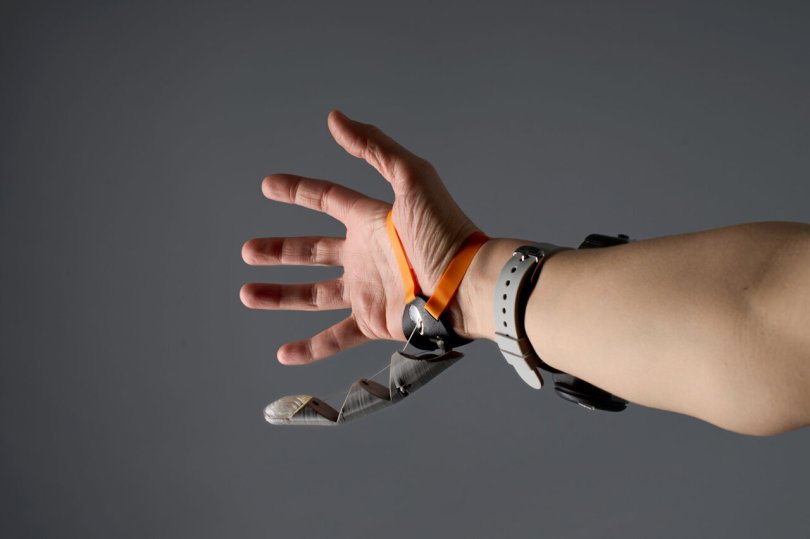
Imagine the legendary guitarist Jimi Hendrix pushing the boundaries of sound with an additional thumb, or historic painters like Frida Kahlo and Vincent Van Gogh completing their masterpieces with greater ease. Such scenarios may soon become reality with the advent of a new 3D-printed robotic wearable called “The Third Thumb.” Designed to augment human capabilities, this device represents a significant step forward in wearable motor augmentation technology, aiming to enhance accessibility and functionality.

How the Third Thumb Works

Developed by Dani Clode from the University of Cambridge, The Third Thumb is a cutting-edge, 3D-printed robotic appendage controlled by the user’s toes. Here’s how it functions:

  • Design and Operation: The device is strapped to the wrist and sits on the opposite side of the palm from the user’s natural thumb, resembling an extended finger. It is operated via two sensors placed under the big toes: the right toe controls horizontal movement and the left toe controls vertical movement. The device’s wireless, proportional controls translate toe pressure into thumb movements, allowing for precise manipulation of objects.
  • Potential Applications: Beyond aiding those who have lost limbs, The Third Thumb could significantly enhance various biological functions, potentially making complex tasks easier and more efficient. Researchers envision it improving productivity and safety across diverse fields.

Broad Testing and Impressive Results

The Third Thumb has undergone extensive testing, with researchers presenting it at the 2022 Royal Society Summer Science Exhibition. Over five days, 596 participants, ranging from ages 3 to 96, tested the device. Key findings include:

  • Ease of Use: An impressive 98% of participants were able to don the device and manipulate objects within one minute of use. The tests included grasping pegs from a pegboard and handling various foam objects, with over half of the participants successfully completing both tasks.
  • Inclusivity: The results showed no significant differences in performance based on age, gender, or handedness, highlighting the device’s broad applicability and effectiveness across diverse user demographics.

Ethical Considerations and Future Prospects

The researchers emphasize the importance of inclusivity in the design of wearable technology. As Professor Tamar Makin notes, ensuring these devices are accessible to all, particularly marginalized communities, is essential for equitable technological advancement.

  • Design Philosophy: Dani Clode underscores that The Third Thumb’s design aims to be as inclusive as possible, addressing potential disparities in technology use and ensuring that advancements benefit a wide range of users.
  • Real-World Applications: Initial demonstrations of The Third Thumb reveal its potential for practical tasks—such as squeezing fruit, pinching thread, and even playing guitar—showcasing its versatility and utility.

Conclusion

The Third Thumb represents a groundbreaking development in wearable technology, offering new opportunities for enhancing human capability. While learning to use the device may initially seem unusual, the recent research indicates that it is both intuitive and effective. As technology continues to evolve, The Third Thumb could play a significant role in expanding the boundaries of what is possible for creators and everyday users alike.